Smith Farm
Wakonda’s 82 acres were originally part of the prosperous Smith Farm; some old apple trees remain scattered throughout the property. The barn on East Schroon River Rd, just South of the entrance road, part of the Smith farm, was built circa 1850 and typical of Adirondack barns of the period. Its post and beam construction is put together with wooden pegs, which were cheaper by far than metal during the Civil War era and easier to replace. The house next door, now owned by Gene and Marlene Ostertag (more about the Ostertags later) is built on part of the old farmhouse foundation. The small cottage to the left of the house, known as Papoose, is built over the original icehouse. In the days before refrigerators were in every home, blocks of ice were harvested from Smith Pond (Lake Wakonda) in the winter. Wrapped in bales of hay and sawdust and stored in the stone-walled icehouse, the ice would last through the summer and be used to preserve meats and dairy items for the farm and later Camp Wakonda. There is also evidence of old logging roads on the property; cribbing in the Schroon River discloses the location of an early river crossing for horse-drawn logging flatbeds.
A Children’s Camp
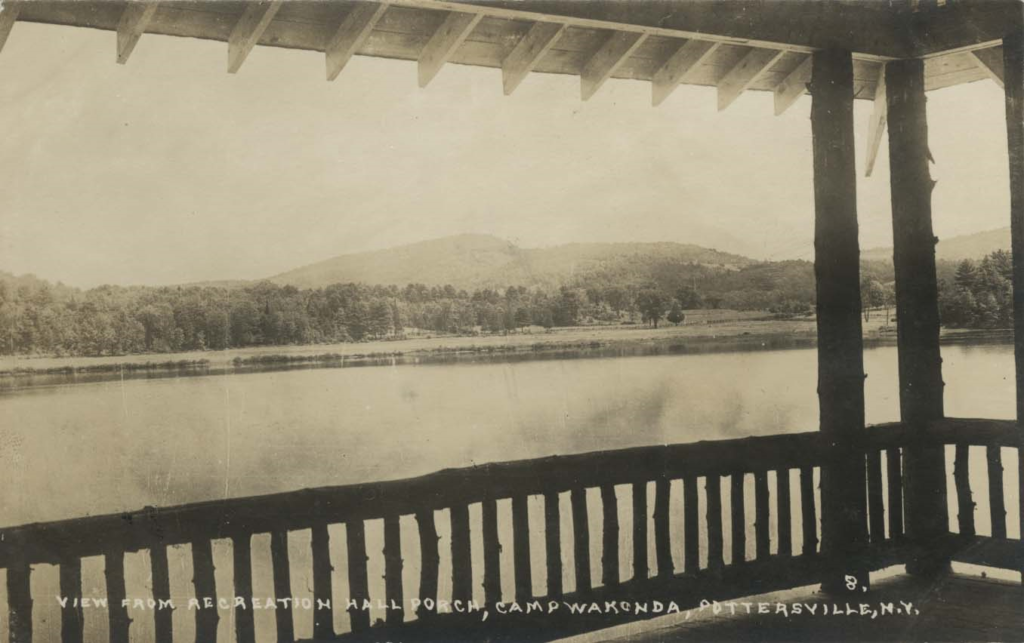
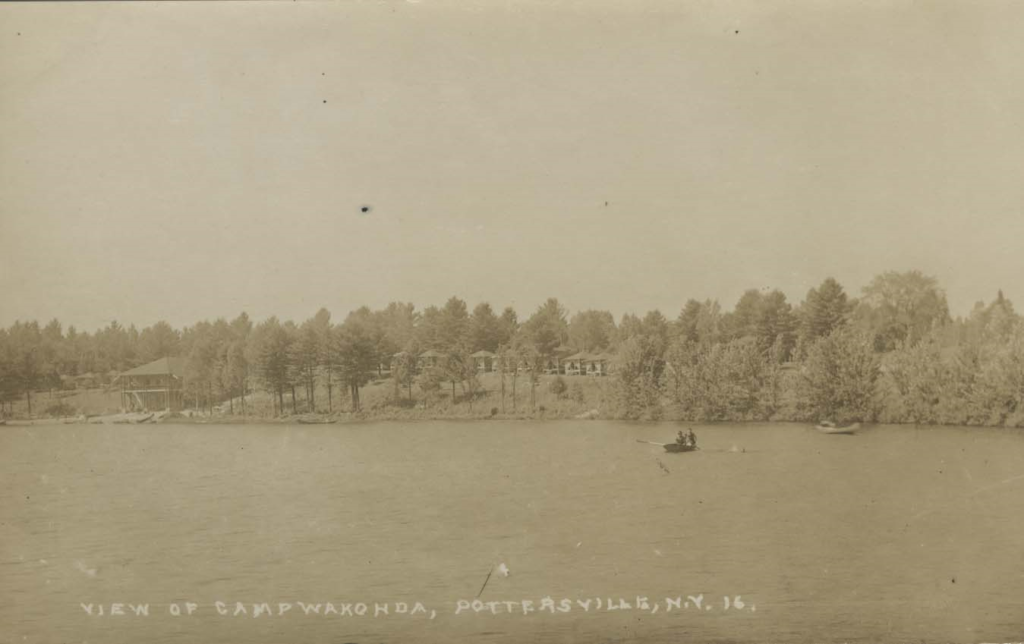
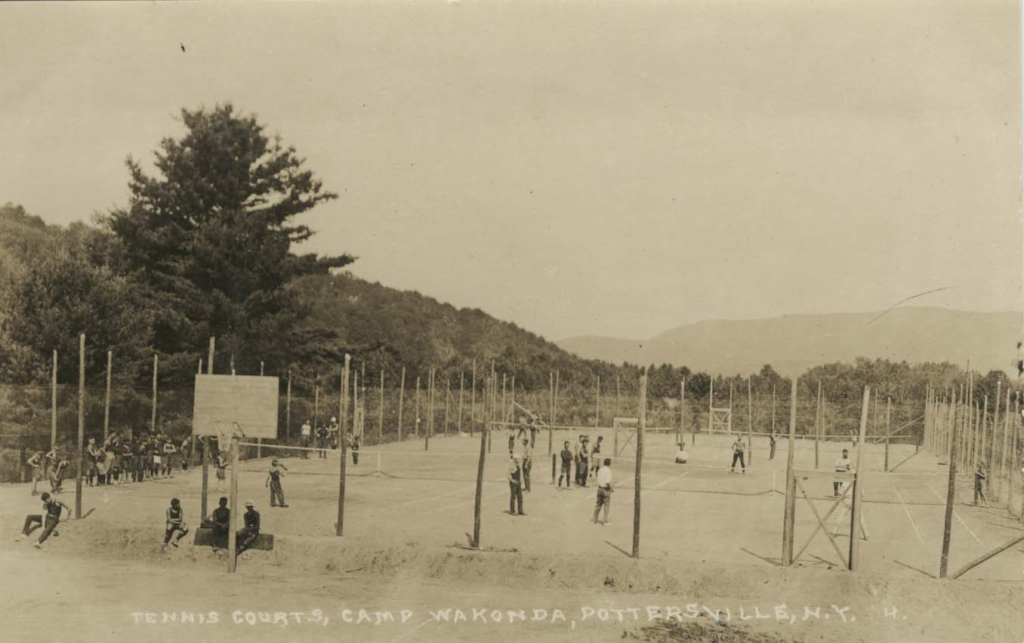
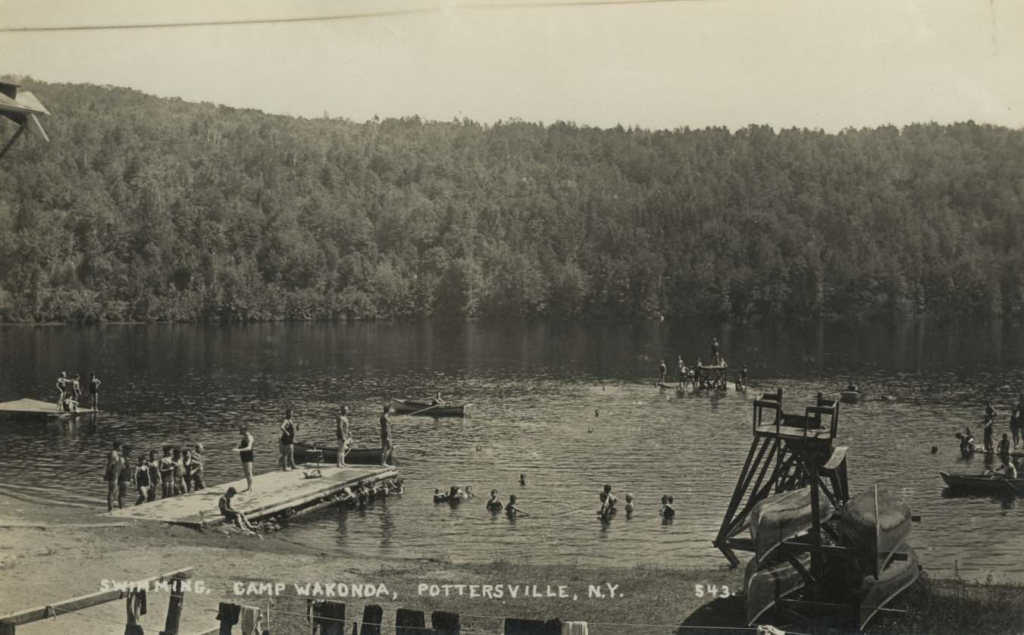
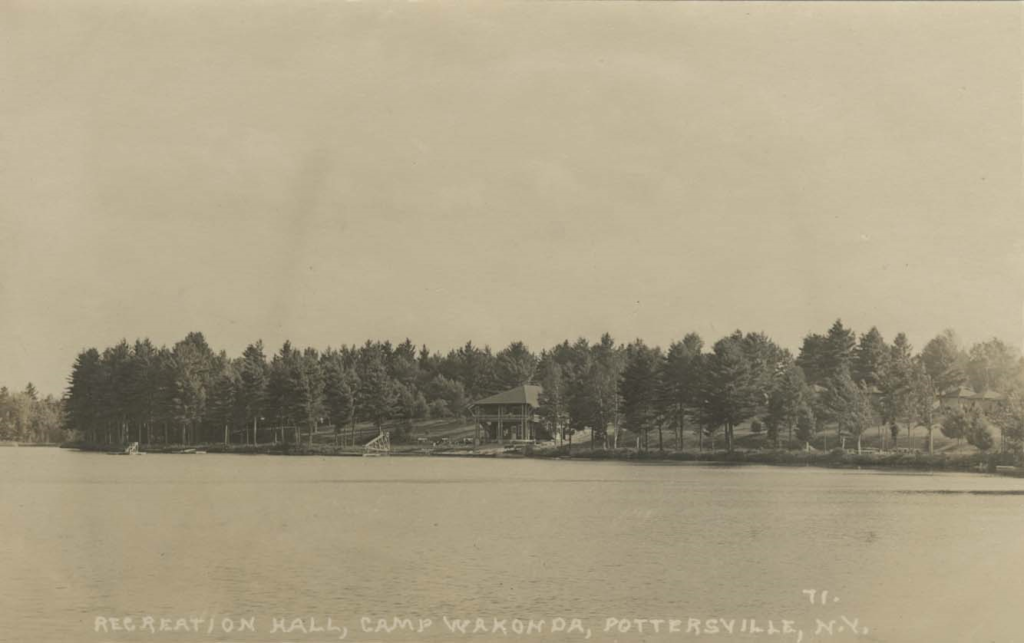
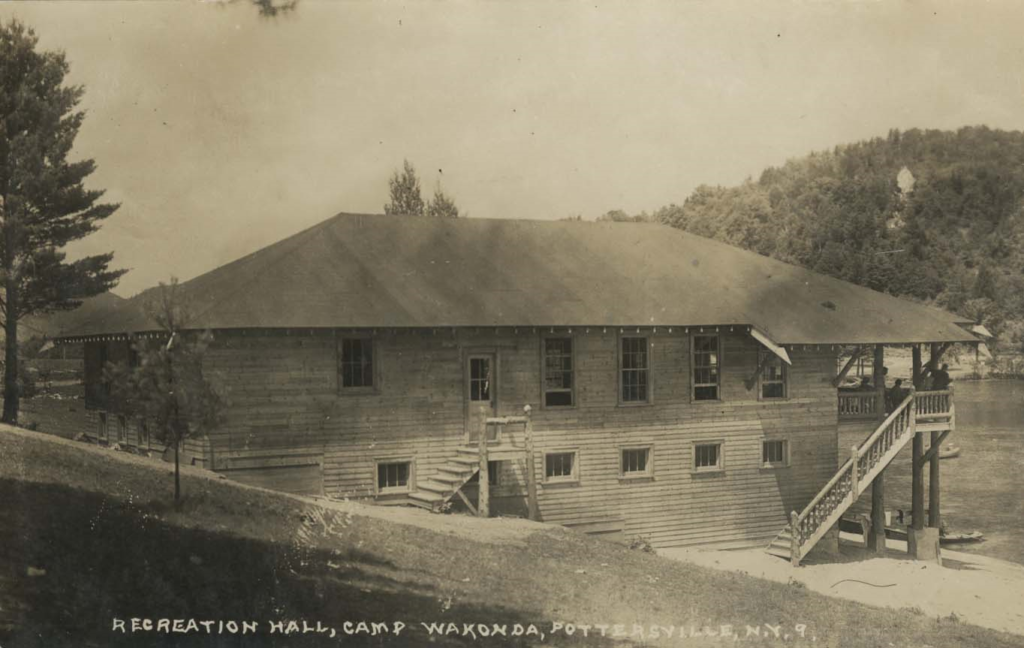
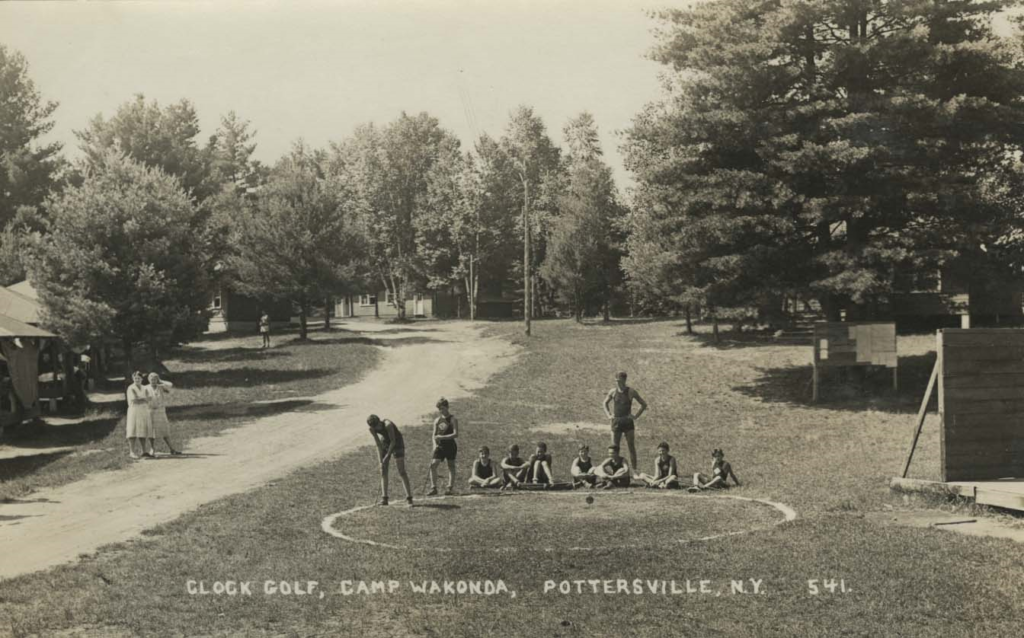
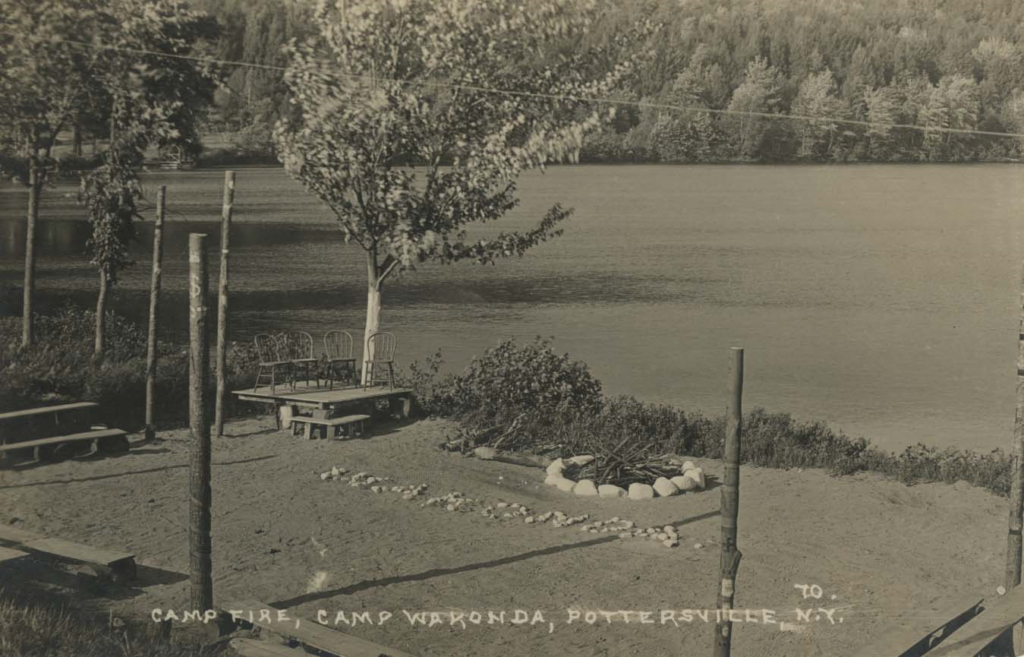
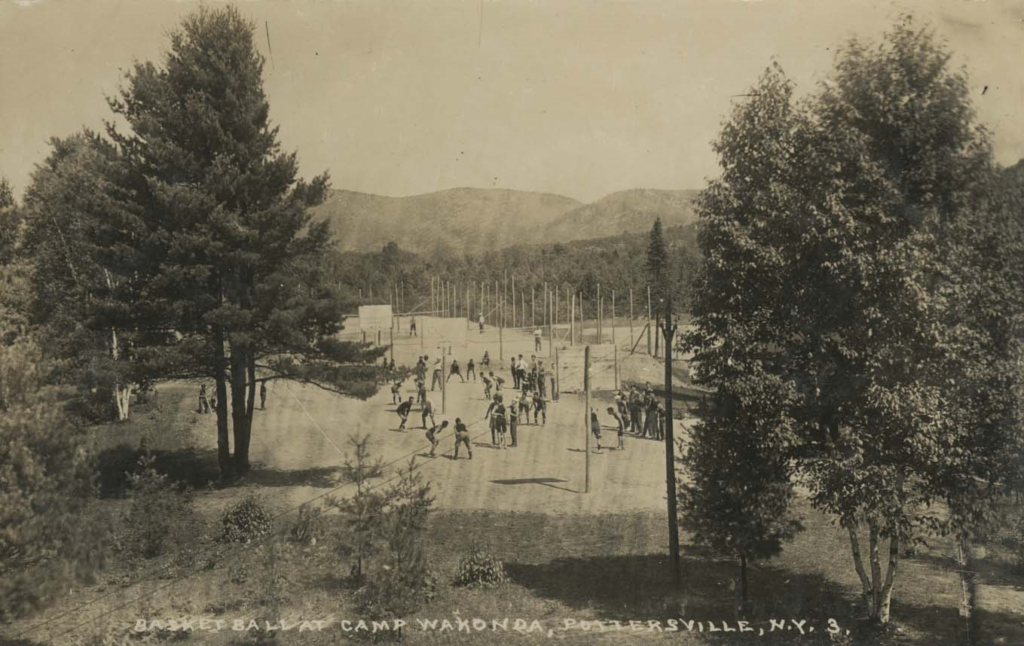
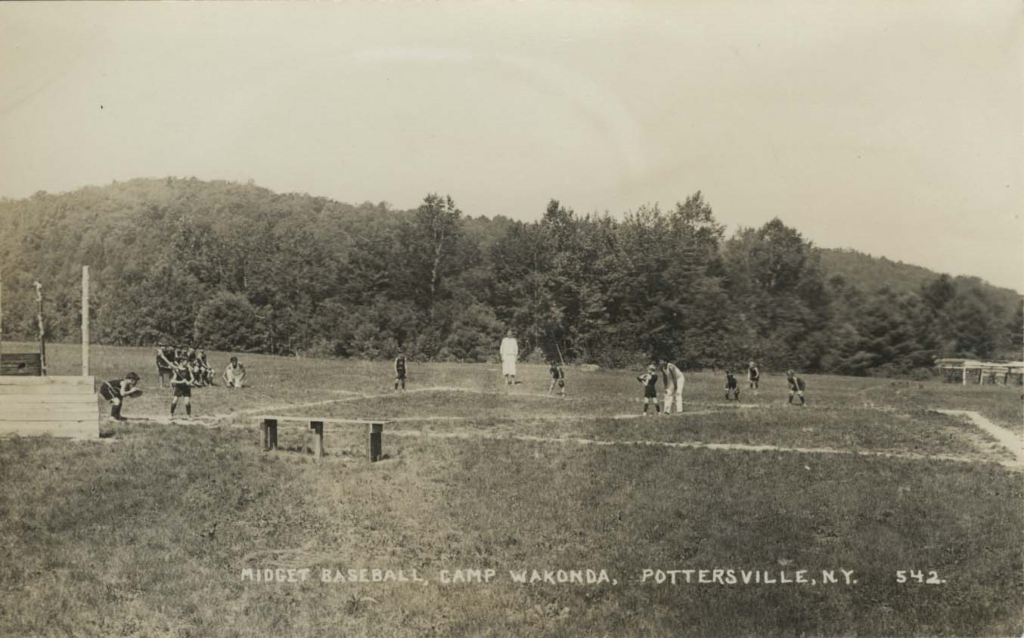
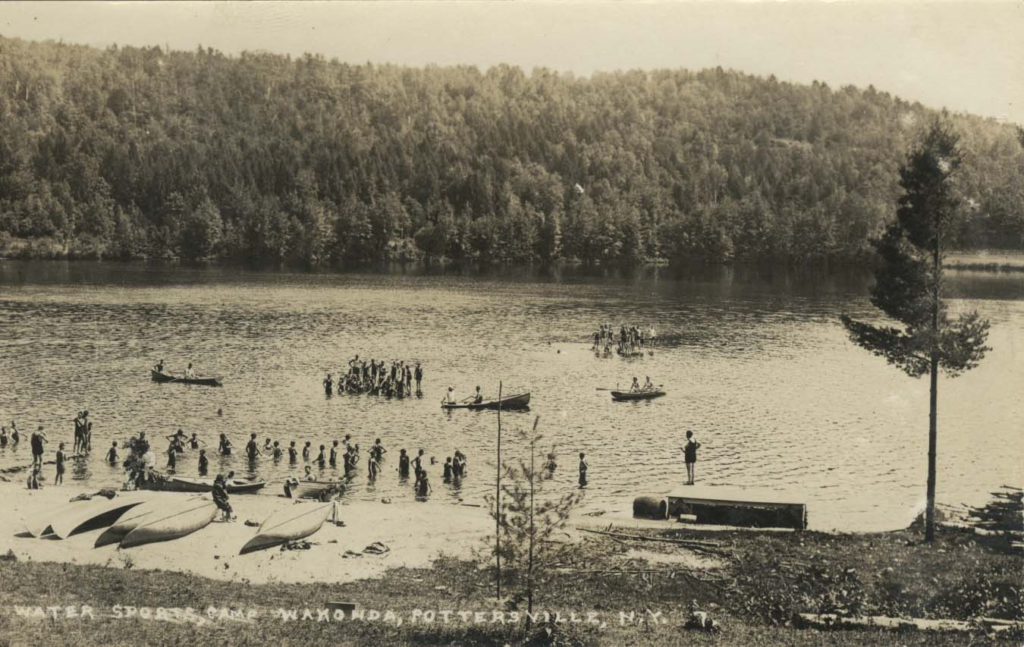
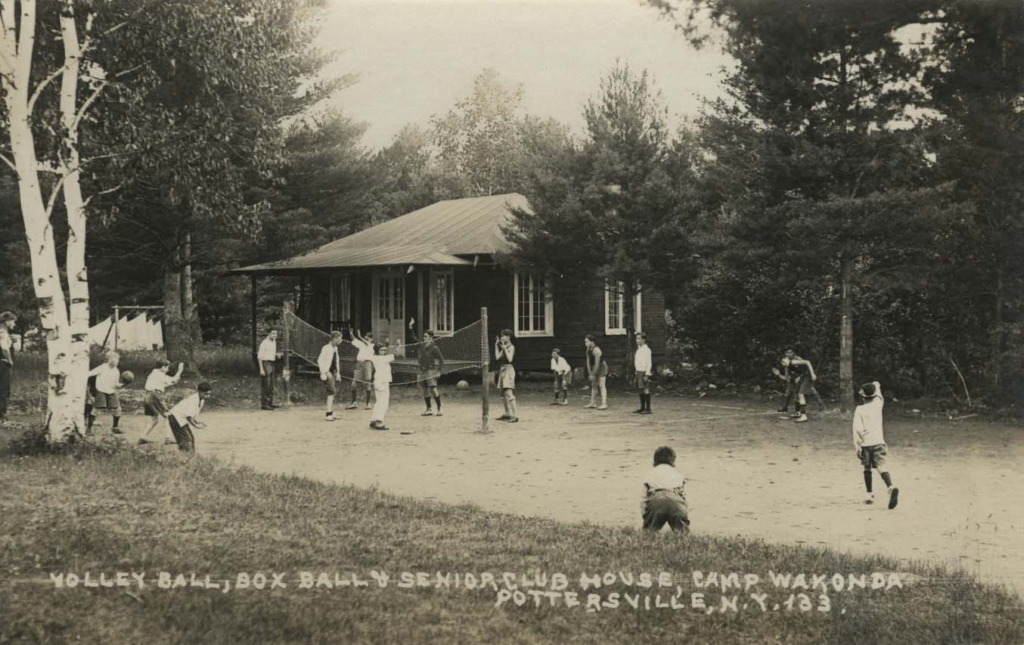
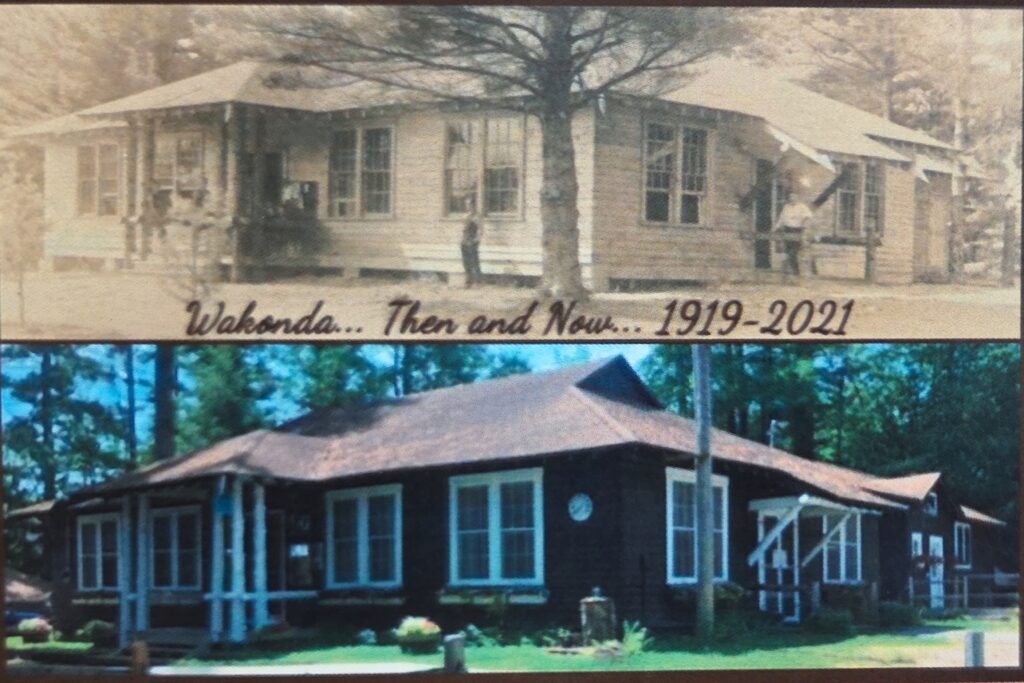
Camp Wakonda was established in 1919 as a boy’s camp during the heyday of children’s camps in the Adirondack’s, sister to other, similar camps in the area such as Redwing, Point-O-Pines, Saskatchewan, and the Brant Lake Boys Camp. Campers customarily arrived by train to Riparius and were taken by coach to camp for their summer recreation. In what is presently the lounge and camp store, awards still hang on the walls from sports competitions between local camps. Only one beach existed during this stage of Wakonda’s history; a whitewashed wooden dock with boat moorings on one side occupied the place of the more permanent pier there today. The first recreation hall was erected at this time, as were the red clay tennis courts. Old rifle shells can still be found in the grass where there once was a practice range.
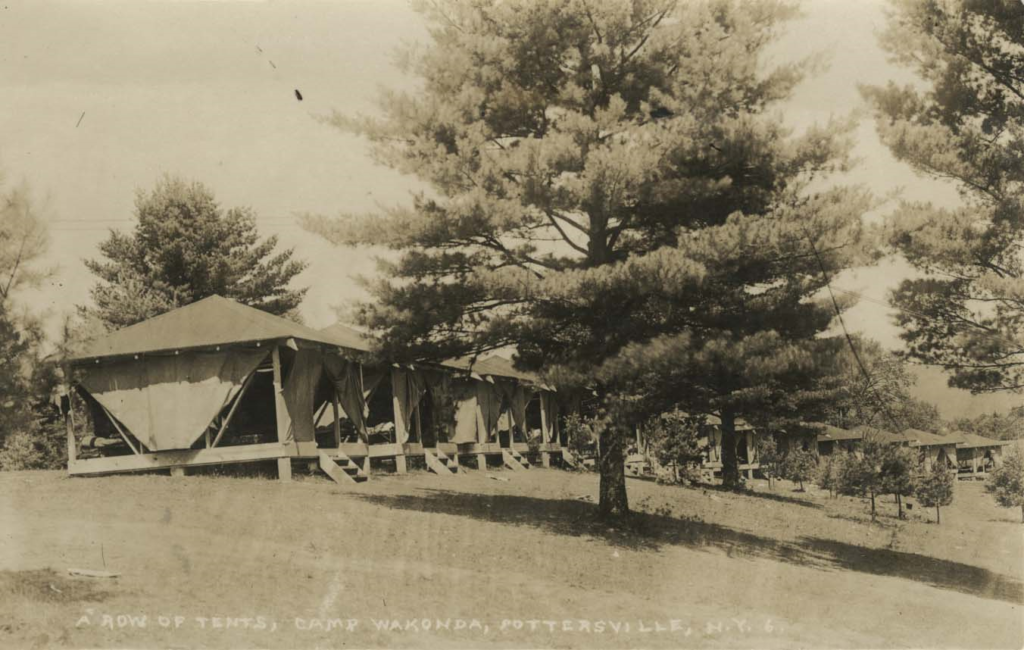
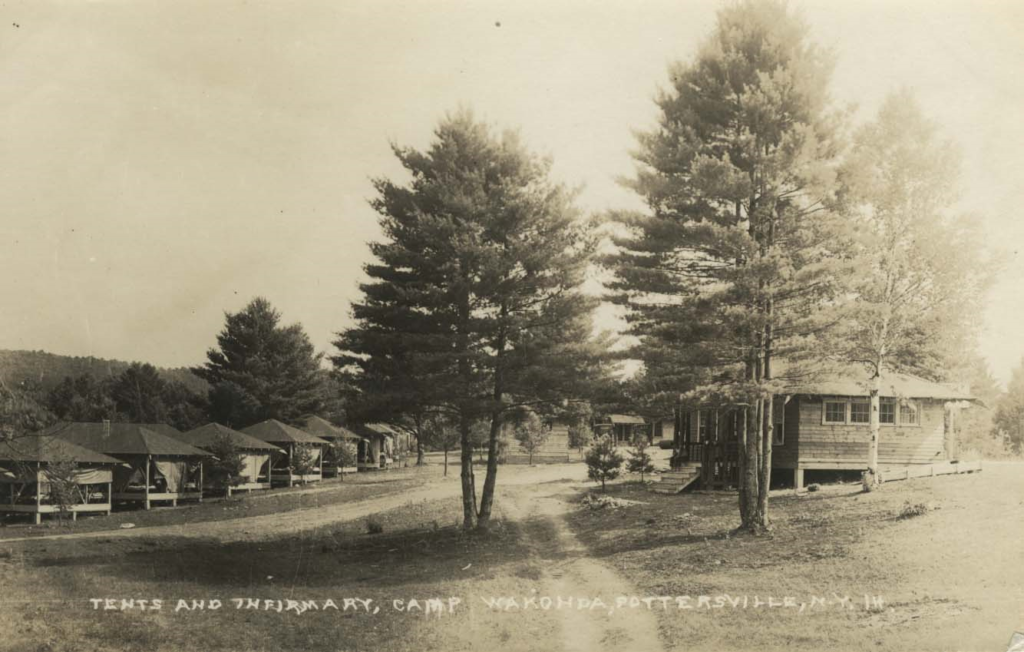
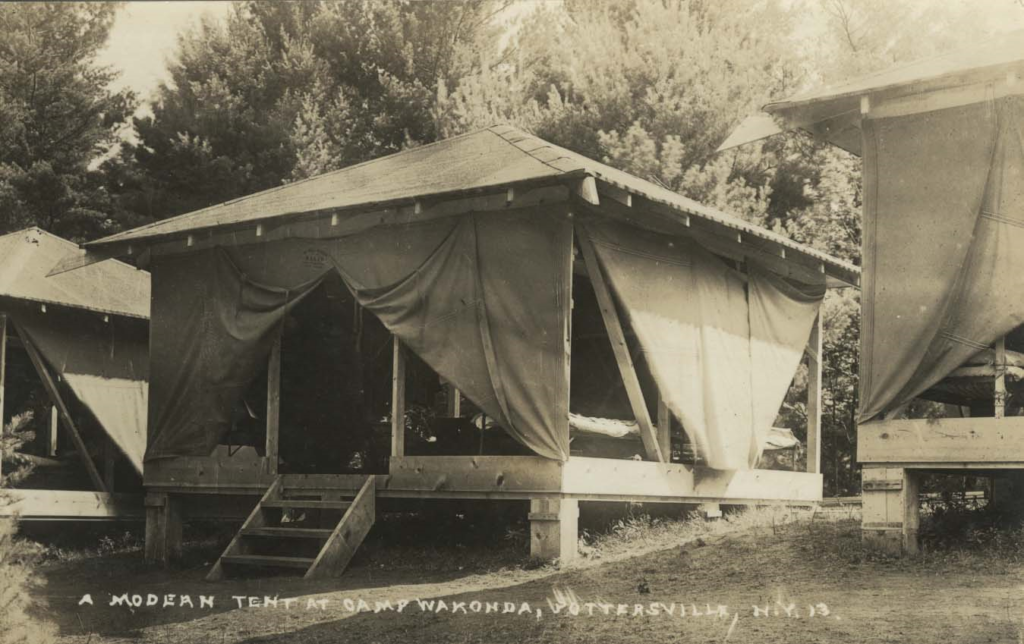
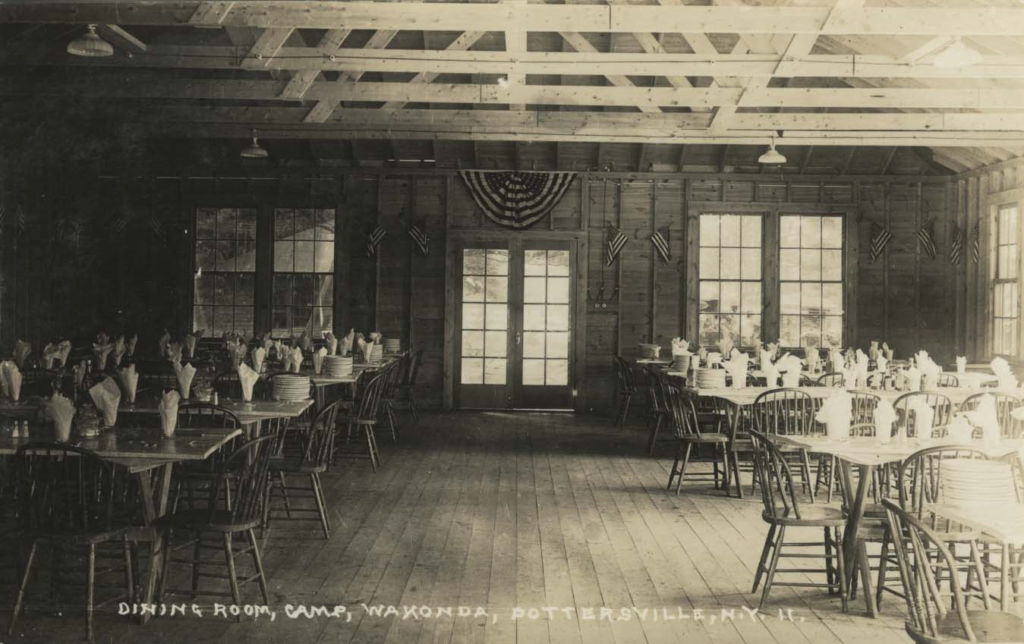
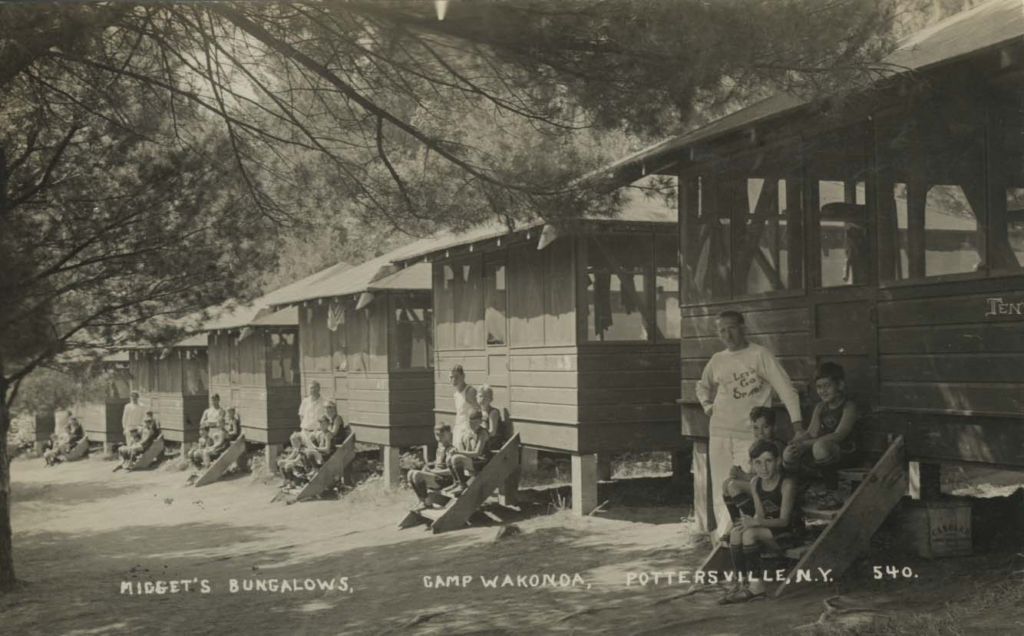
Camp Wakonda only utilized about 10% of the original Smith Farm property. Housing facilities for the young campers consisted of tent platforms, with central facilities such as shower houses, a kitchen and dining hall, an infirmary, and staff lodging. Siding was gradually added to the tent platforms, turning them into small summer cabins. Later, three of these units were combined to create the existing cottages.
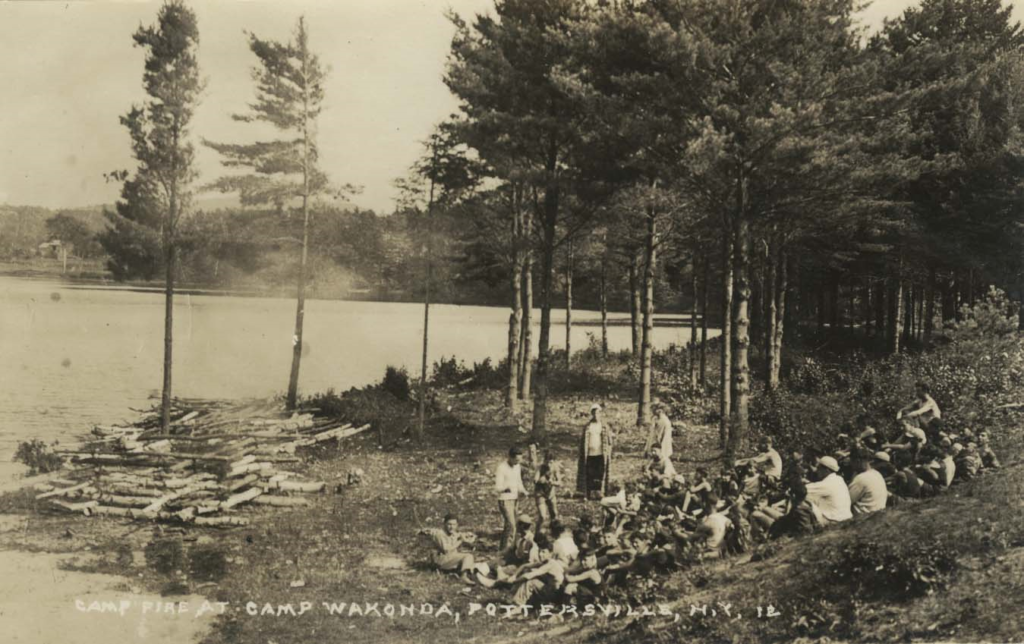
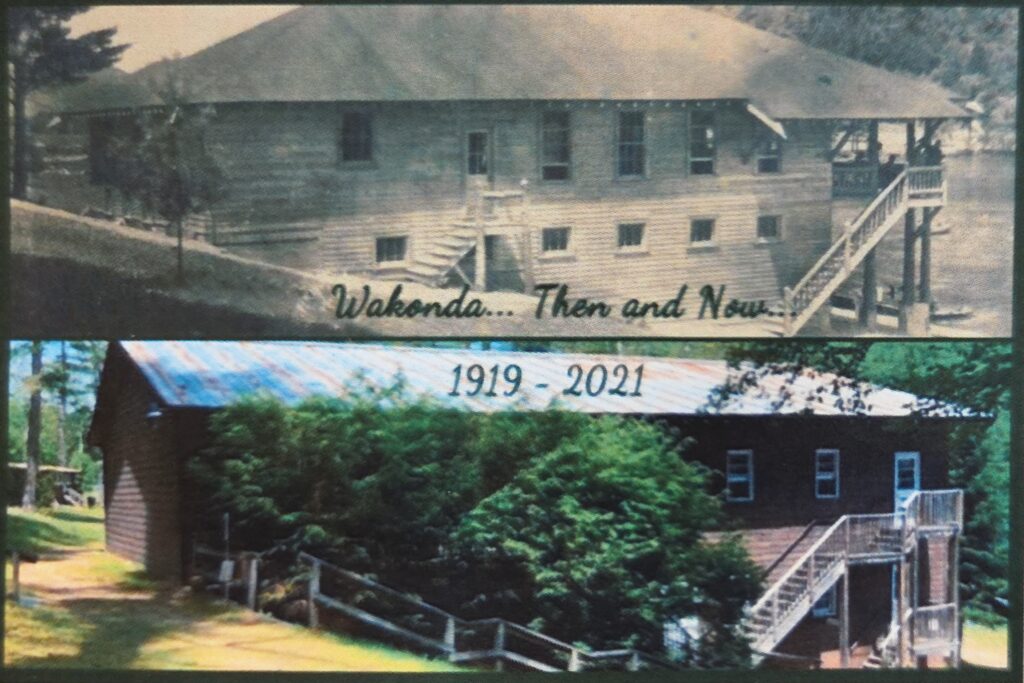
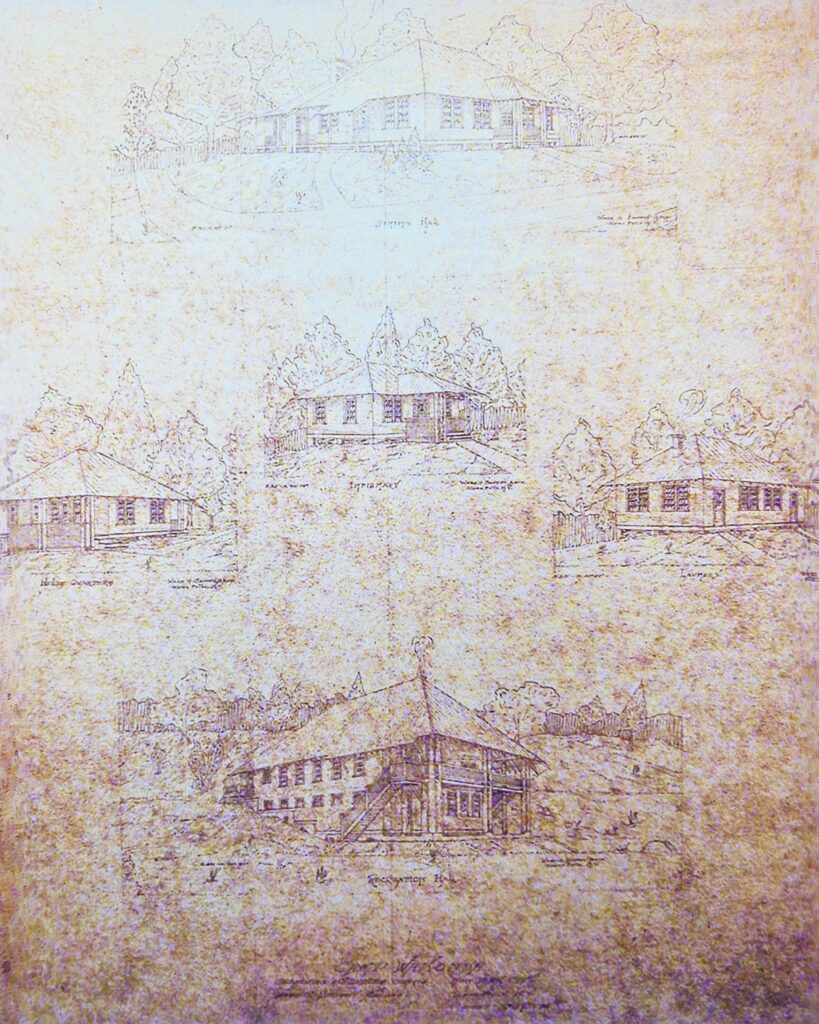
The building that houses the present lounge and camp store was designed by prominent Glens Falls architect Ward Grover Shippey. It was the dining hall and kitchen for the children’s camp; kitchen utensils displayed in the store were all used here at one time. The kitchen had coal-burning ranges and was supplied with ice from the lake for food storage. The large maple display table in the camp store was the kitchen workbench, and the old bread-rising trough is still in the building where the bakery had been. Totem poles in the camp store, were carved and painted by former campers, and originally stood outside near the lake and campfire area.
In the 1950’s, Warren County purchased and used gravel from the camp’s natural deposits to rebuild and pave what is now East Schroon River Rd. This led to what is now referred to as the gravel pit on the grounds. Also, in the 1950’s, the boys camp became co-ed. In the 1960’s, the last children’s camp to operate on the property, Camp Sil-O-Ette, a weight-reducing camp for girls, opened and operated until the property was offered for sale.
Wakonda Today
Gene and Marlene Ostertag acquired the property in October of 1971 and developed it into Wakonda Family Campground. The Ostertag’s had three young children and a vision; they transformed the former children’s camp property into a place where families could come together and create memories of their own. They got busy building roads and sites, converting the dormitories into housekeeping cottages; they modernized the plumbing and electrical systems in all the buildings. They preserved the original campground name, Wakonda, which is Native American for “Great Spirit”, and named the cottages for Native American tribes. Thunderbird cottage is named after the Native American totem for the spirit of lightning and thunder. A stylized Thunderbird is the camp’s symbol. Chipped flint arrowheads are occasionally found on the grounds, perhaps originally inspiring the Native American theme.
Over the years while raising their family, the Ostertags upgraded the facilities steadily to provide better services to families while preserving the natural beauty of the property. Roads and site improvements were made; land along the Schroon River was improved, a second beach was developed on Smith Pond (Lake Wakonda), sites were upgraded to include water and electricity, a game room was added to the lounge, and a second playground was built. The campground was always well maintained by the Ostertags and their staff. Many families returned year after year, coordinating with the friends they met there to be together again, the summer next.
In 1989, the Ostertags were ready to retire from owning a busy and successful family campground. Rather than selling the property on the open market, they chose a different path. They offered Cooperative shares to families who wanted to become part of the campground community; camping sites and cottages were made available for sale. Shares were first offered to the families who had been camping at Wakonda Family Campground, and many families bought in along with other families who were new to Wakonda.
The Ostertags decision to transfer the campground to a Cooperative helped preserve the property as a place for families to recreate, creating what we know today as Wakonda Family Campground Cooperative. In doing this, they have created a lasting legacy for generations of families to enjoy.
Scenes from the Early Days….